Open Source Neuro
Open Source Neuro is a collaborative organisation that develops open hardware, software and experimental resources that help educators, students and researchers work with neuroscience systems they can inspect, understand and adapt..
We support their use through documentation, teaching, workshops and collaborative development.
OSN philosophy
Neuroscience increasingly depends on sophisticated experimental technologies, yet access to, understanding of and control over those systems remain uneven.
Open Source Neuro develops open hardware, software and documentation to make relevant parts of experimental implementation inspectable, reproducible and adaptable, opening not only scientific outputs, but more of the means through which evidence is produced.
In research, this supports methodological transparency and the freedom to adapt experimental systems around scientific questions, while reducing unnecessary dependence on closed technological infrastructures.
In education and continuing training, it helps bridge conceptual knowledge and experimental practice: learners examine how questions become measurements, how instruments shape observations, and how evidence, uncertainty and methodological limitations constrain interpretation.
For OSN, open source is a means to advance open science: broadening access to experimental practice while strengthening our capacity to understand, question, document, reproduce and build upon it.
Keep relevant parts of hardware, software and measurement visible enough to understand how an observation was produced and to scrutinise the method behind it.
Treat documentation, versioning and implementation details as part of the scientific method, so experimental systems can be reproduced, interpreted and built upon.
Develop and modify open experimental systems around scientific questions rather than forcing every experiment to conform to a fixed technological platform.
Use open, hands-on systems to teach experimental reasoning, instrumentation, uncertainty and the limits of interpretation—not only neuroscience concepts.
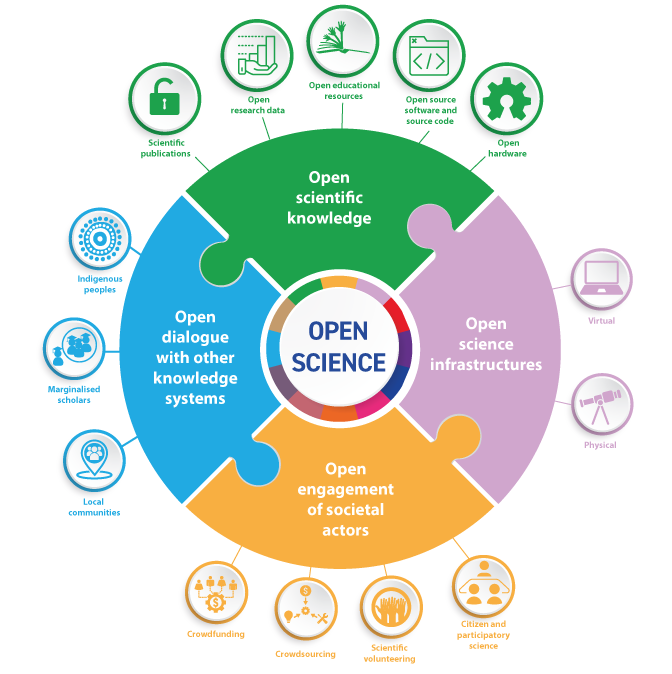
Open scientific knowledge refers to open access to scientific publications, research data, metadata, open educational resources, software, and source code and hardware that are available in the public domain or under copyright and licensed under an open licence that allows access, re-use, repurpose, adaptation and distribution under specific conditions.
It also refers to the possibility of opening research methodologies and evaluation processes.
What we develop
We develop open hardware, software and practical resources for neuroscience education and training, alongside experimental systems for research.
Existing platforms are continuously refined and extended, while new tools are developed with educators and researchers around clearly defined teaching, training and scientific needs.
This allows OSN to build on proven systems while adapting its work to new experimental questions, methods and learning contexts.
Open teaching platforms, software and practical resources for university courses, workshops, summer schools and continuing scientific training.
Learners manipulate experimental variables, acquire and analyse data, and practise the reasoning that connects scientific questions, measurements and interpretation.
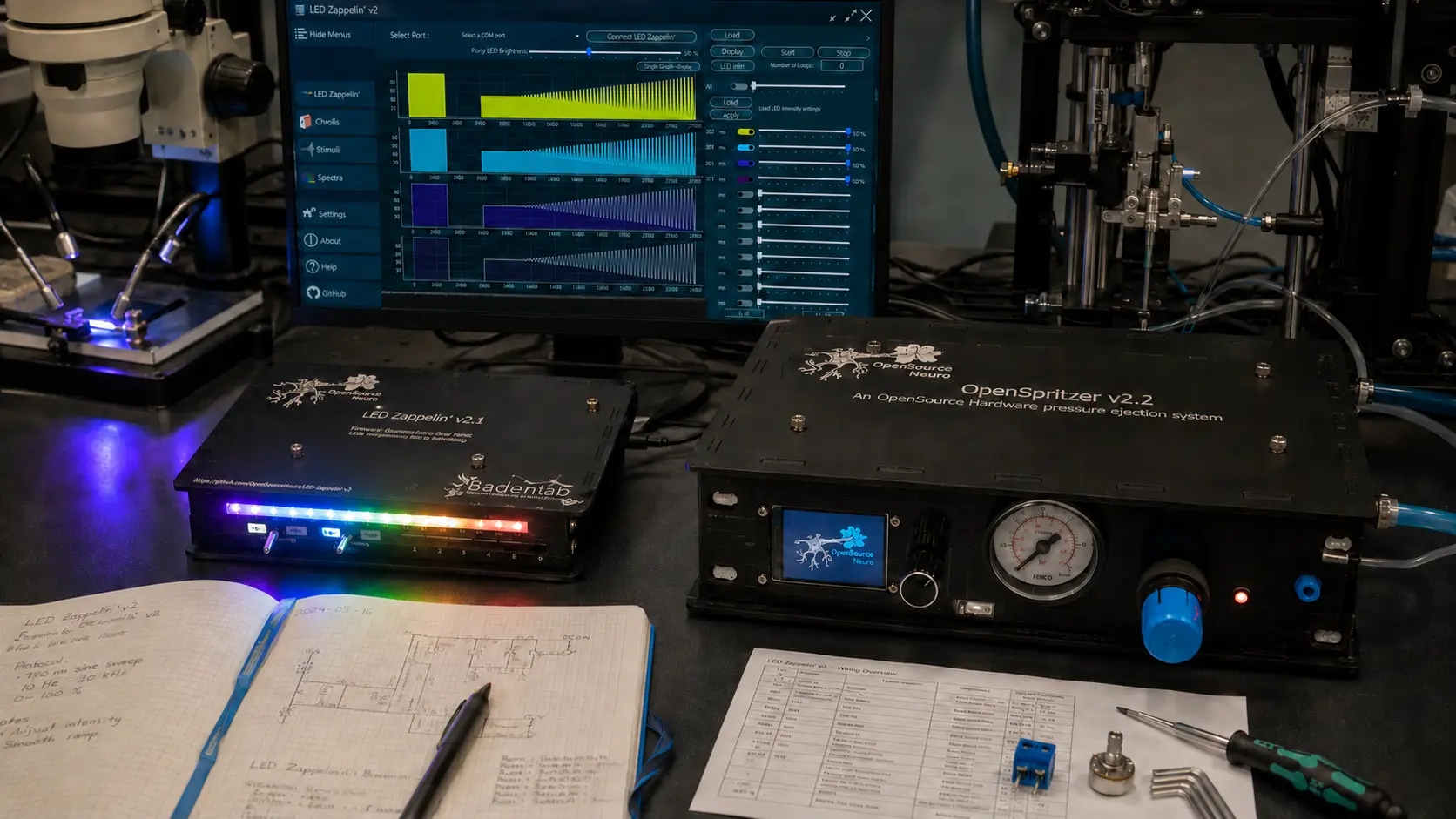
Open instruments, software and experimental systems developed with researchers around defined scientific questions and measurement problems.
Work can involve adapting existing technologies or developing new hardware, firmware, acquisition and experimental-control tools for laboratory workflows.
Featured Work
OSN projects bring hardware, software, documentation and experimental methodology together into systems designed for real teaching and research contexts.
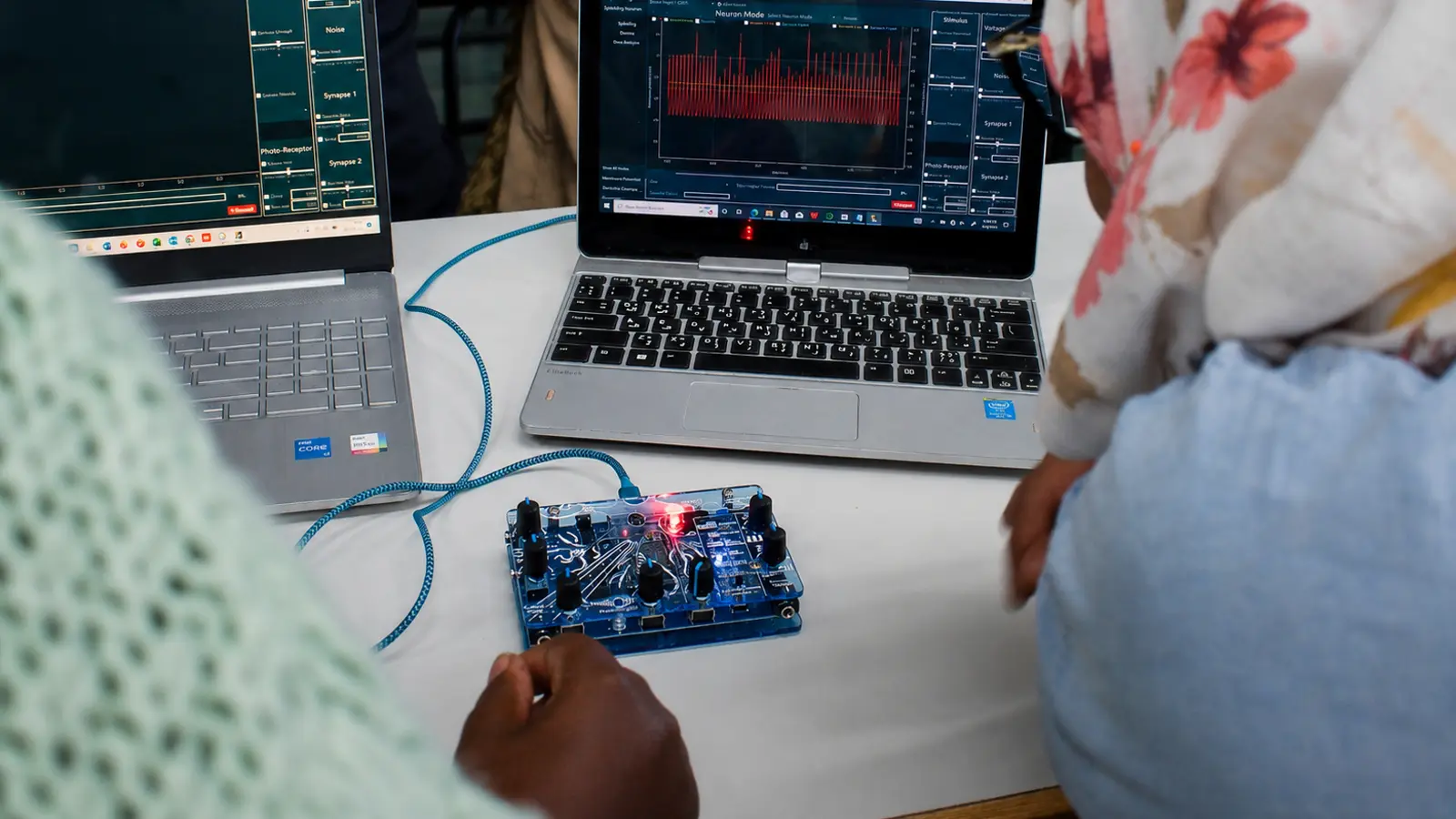
Spikeling gives learners a physical experimental system for exploring neural activity through stimulation, recording, acquisition and analysis. It combines an accessible spiking-neuron platform with software, experimental activities and openly documented hardware and firmware.
Used in university teaching and international training, it is designed to support practical investigation and experimental reasoning rather than passive demonstration.
Education in practice
OSN develops complementary teaching platforms that bring electrophysiology-style investigation into the classroom. Each makes a different level of neuronal function observable and controllable, from spiking behaviour and analogue circuit dynamics to the ionic mechanisms that shape membrane voltage.
Used independently or together, the platforms support a progression from introductory practicals to more advanced work in experimental design, data acquisition and analysis.
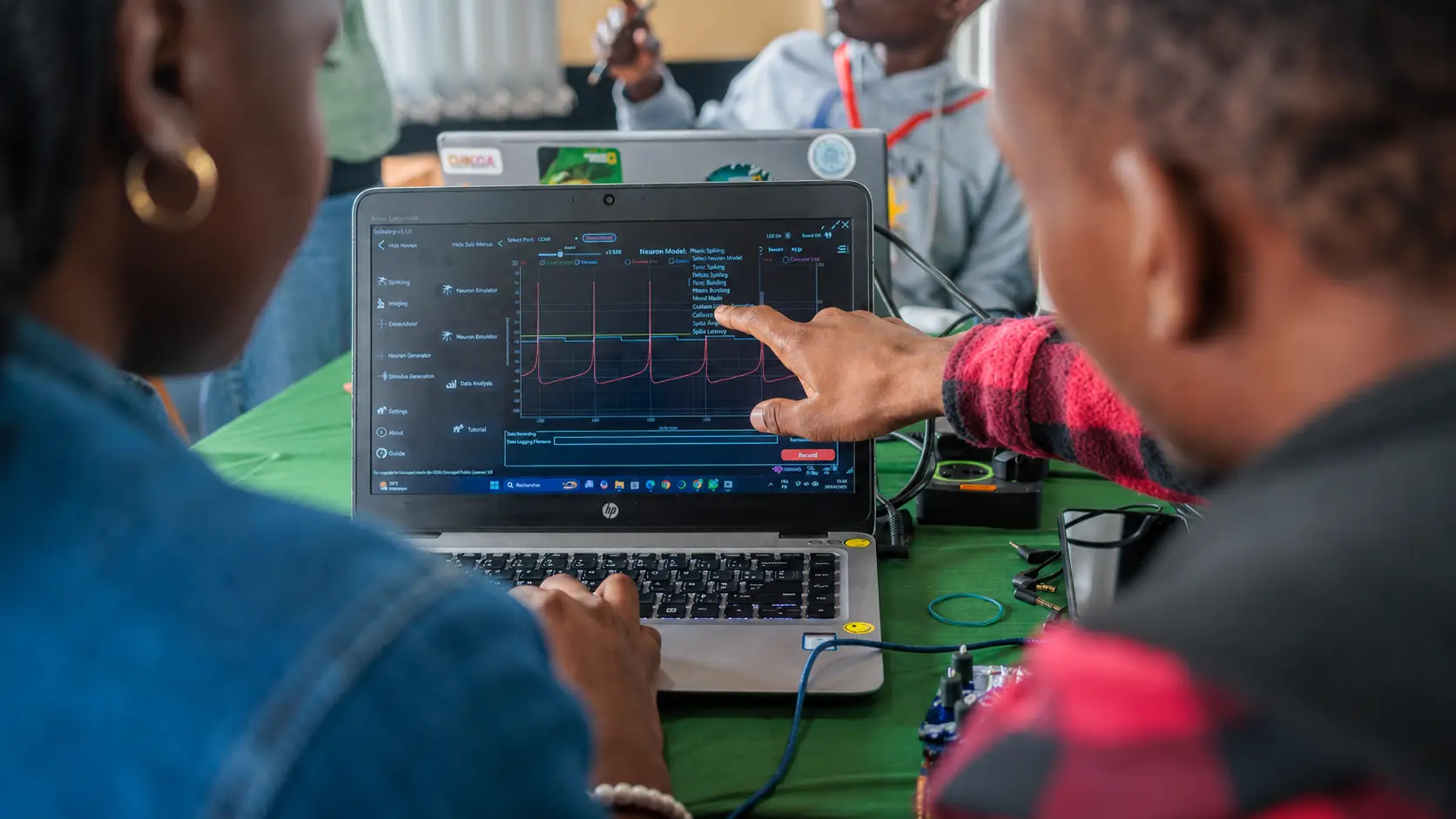
OSN teaching places learners inside the experimental process: changing defined variables, recording responses, working with data and reasoning from observation to interpretation.
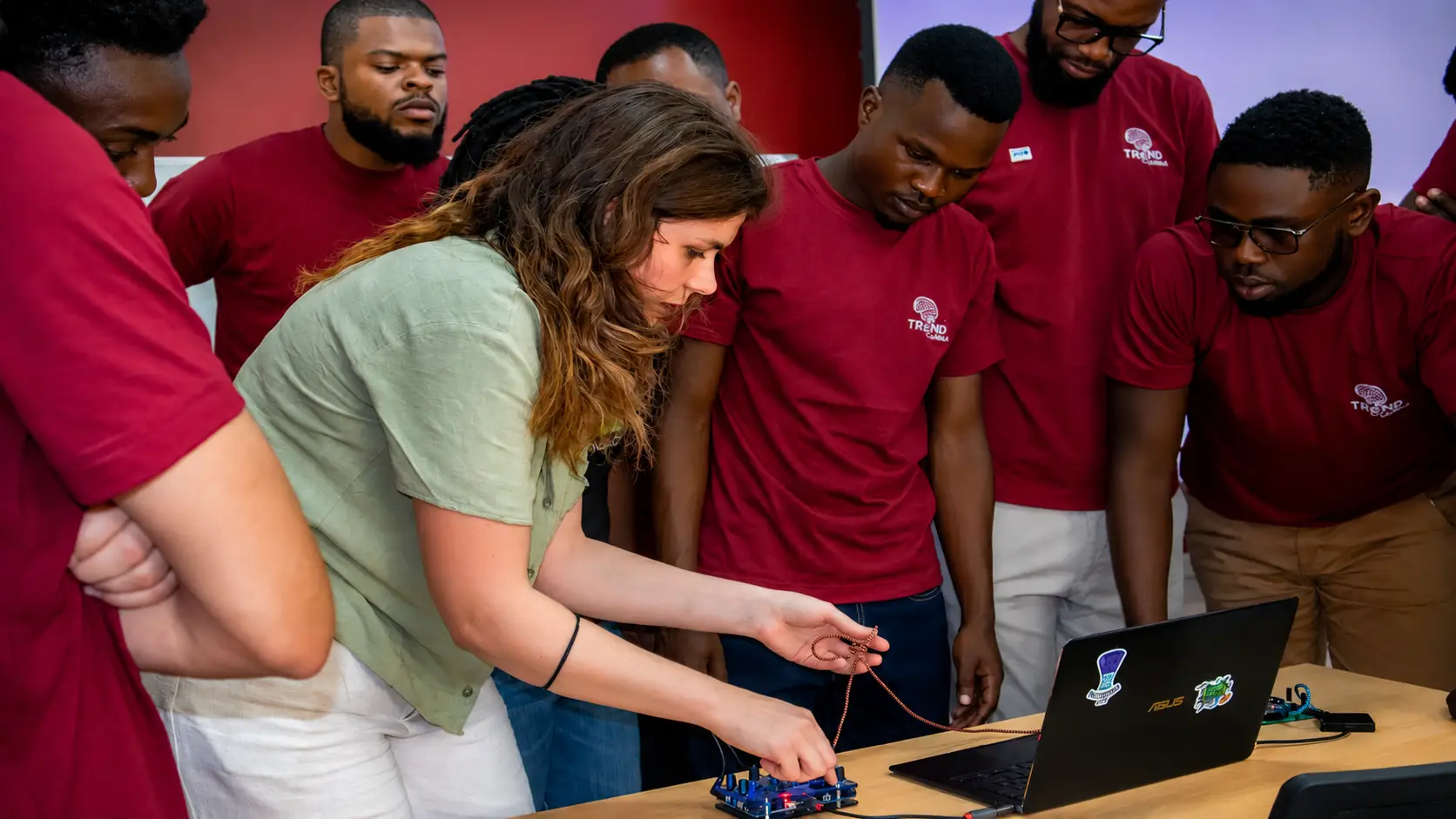
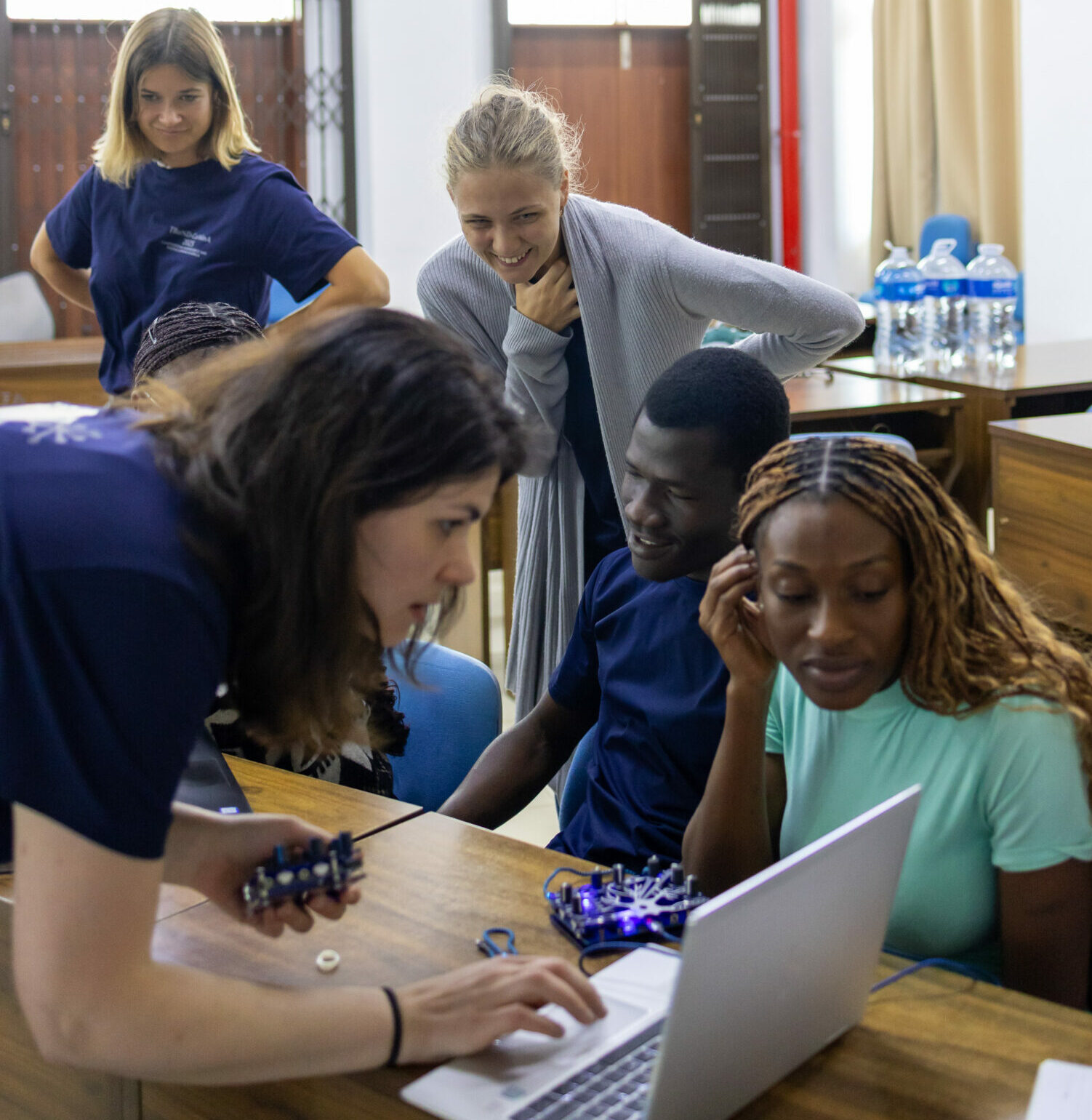
During CaMiNA courses, Spikeling is used as a hands-on experimental platform within practical neuroscience training.
Working in small groups, participants interact directly with the hardware and software, explore neuronal responses, examine recorded traces and discuss how experimental manipulations translated into observations and data.
The sessions used Spikeling to connect neuronal dynamics, electrophysiology-style recording, stimulus design and data analysis, placing physical experimentation alongside the computational and large-scale neuroscience datasets used elsewhere in the course.
This allowed participants to move between manipulating an experimental system and interpreting the evidence it produced, rather than treating the technology as a black box.
What we develop
Our work is organised around two development programmes:
- Open platforms for neuroscience education
- Open tools for experimental research
Across both, we aim to make experimental systems understandable and adaptable, giving educators and researchers greater control over how observations are produced.
Open teaching platforms, software and practical resources that bring electrophysiology-style investigation into the classroom.
Learners can control experimental variables, record and analyse neural responses, and develop experimental reasoning without relying on biological preparations.
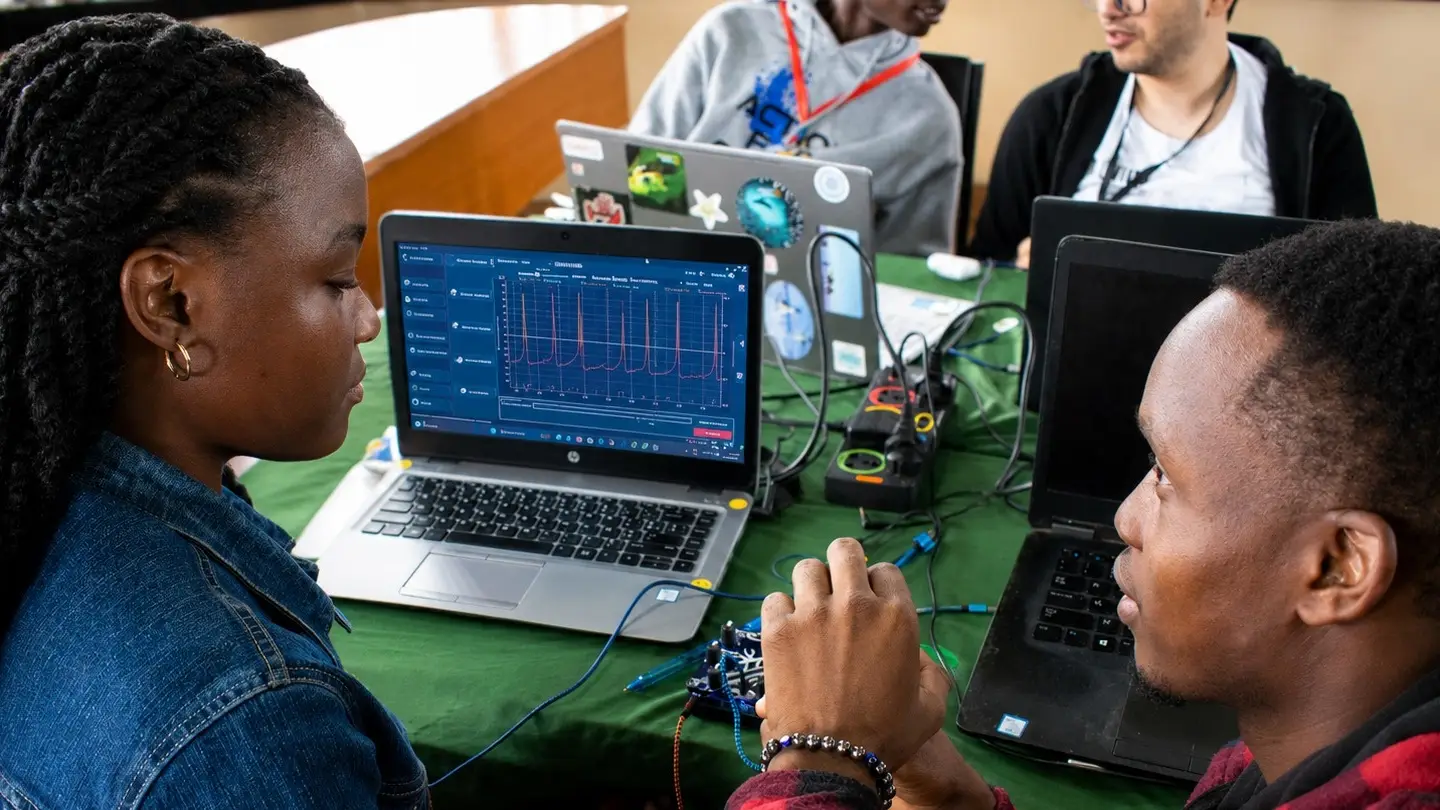
Open instruments, software and protocols developed with researchers to address defined experimental problems.
Documented designs support adaptation, experimental control and integration into laboratory workflows.
Evidence in practice
OSN projects are developed through practical use: in teaching, training, research and public engagement. The examples below connect these activities with dated cases, public documentation and outputs that can be inspected directly.
PARTNER-PROGRAMME CONTRIBUTION
Participants used an open neuronal model to manipulate experimental variables, record responses and interpret how changes in the system affected the observed activity. The practical placed measurement, prediction and experimental reasoning at the centre of the learning process.
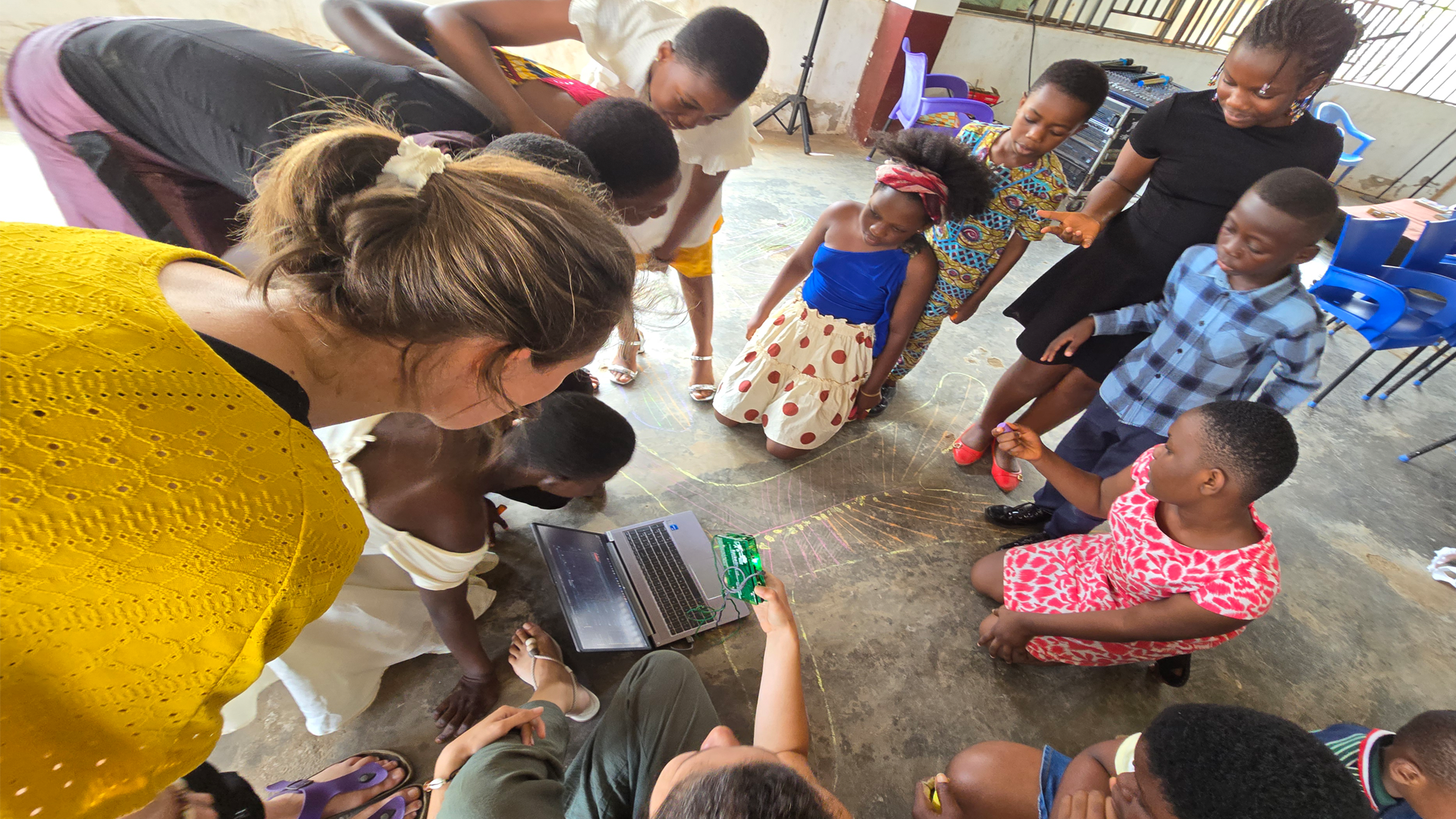
CaMinA summer school - Kenya 2026
AUDIENCE
Course participants and educators
ACTIVITY
Hands-on experimental neuroscience
OSN ROLE
Platform, software and teaching support
DEMONSTRATES
Recording, prediction and interpretation
Explore the public documentation, releases and source files behind the work.
What we develop
Our work is organised around two development programmes:
- Open platforms for neuroscience education
- Open tools for experimental research
Across both, we aim to make experimental systems understandable and adaptable, giving educators and researchers greater control over how observations are produced.
Open teaching platforms, software and practical resources that bring electrophysiology-style investigation into the classroom.
Learners can control experimental variables, record and analyse neural responses, and develop experimental reasoning without relying on biological preparations.
Open instruments, software and protocols developed with researchers to address defined experimental problems.
Documented designs support adaptation, experimental control and integration into laboratory workflows.